
Coming Home to Atlanta: The Places That Shaped My Story
There is a particular kind of feeling that comes over you when a plane begins its descent into Atlanta. The city opens up below in a sprawl of green and glass, familiar in the way that a photograph of your younger self is familiar. You recognize it without quite belonging to it anymore. I was born here. I spent the earliest years of my life here, and then my family moved on, as families do. But Atlanta stayed with me.
I am returning this week, in April 2026, for a reason that carries grief inside it. We are gathering at Agnes Scott College in Decatur for a memorial. My aunt, who served as Dean of Agnes Scott for years, passed, and this city that holds her legacy now holds our goodbye to her. Atlanta has always been layered with meaning for my family. This trip adds another layer, a heavier one, and also something that feels, in a strange and tender way, like coming full circle.
I want to share Atlanta with you the way I actually know it. Not as a travel writer ticking off attractions, but as a woman standing in places where her family’s story lives in the walls.
Agnes Scott College, Decatur
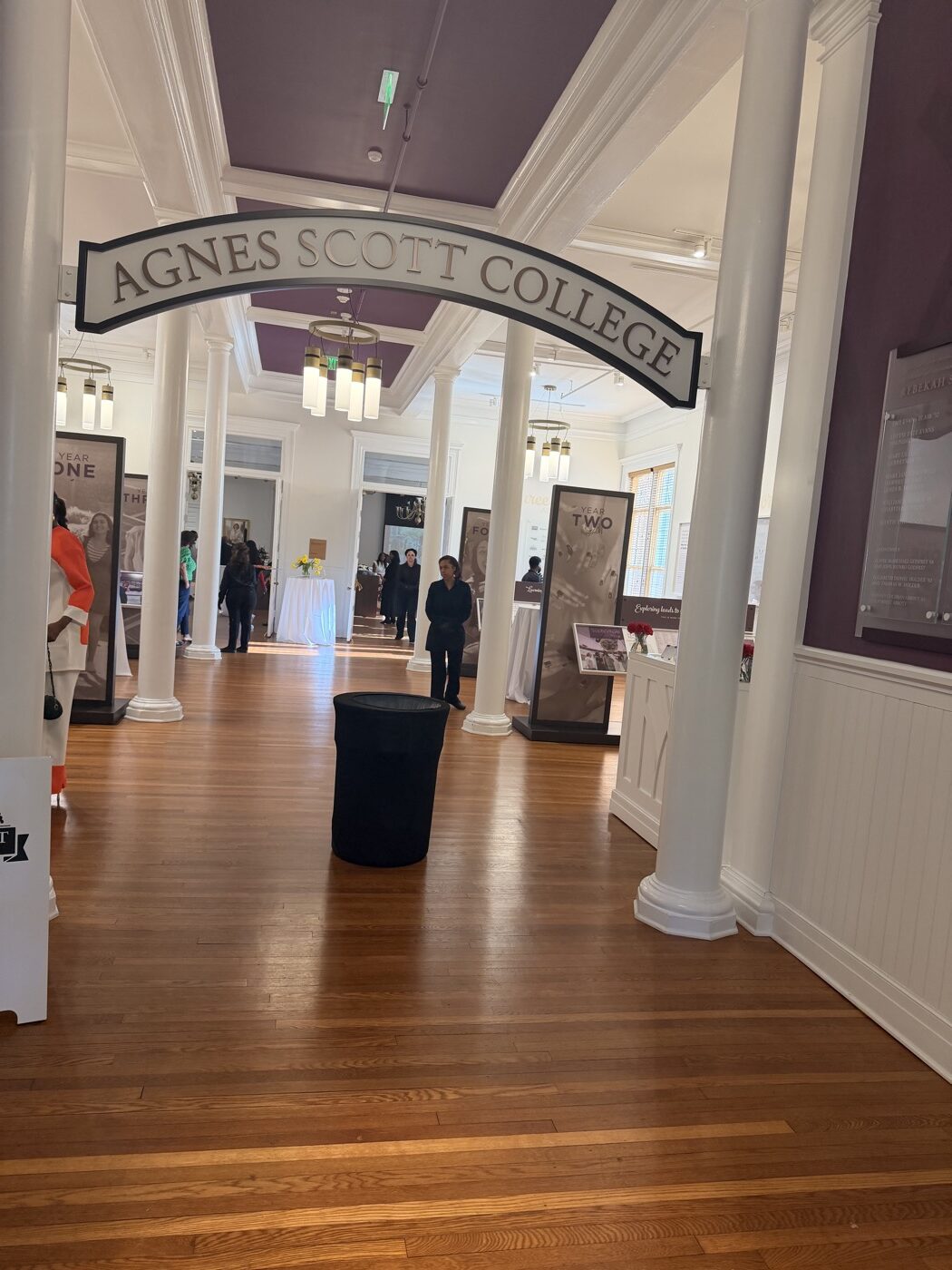
Agnes Scott sits in Decatur, a small city absorbed into the greater Atlanta constellation, and it is one of the most beautiful campuses I have ever set foot on. The Gothic architecture rises with authority and grace, stone archways and old trees creating the feeling of a place that has always taken women’s minds seriously. Founded in 1889, Agnes Scott is a prestigious liberal arts college with a national reputation for academic rigor and a campus that stops you in your tracks.
My aunt shaped this institution and was shaped by it in return. She dedicated years of her life to its mission, to the education of women, and I grew up understanding Agnes Scott not as an abstract institution but as something personal. Her work mattered. The students whose lives she touched mattered. Returning to this campus for her memorial is not simple. It is the kind of experience that asks you to hold pride and grief at the same time, and to let them coexist.
If you visit Decatur, walk the Agnes Scott campus. It is open to visitors and sits within easy reach of restaurants and shops in the charming Decatur Square. The campus alone is worth the short drive from Atlanta proper, but the square surrounding it offers good food, independent bookshops, and the distinct character of a community that has preserved its identity within a growing city.
Spelman College
A short drive toward the West End brings you to the Atlanta University Center, and within it, Spelman College. If Agnes Scott feels like a Gothic cathedral to women’s education, Spelman feels like a declaration. It is one of the most important historically Black colleges in America. One of the most important, full stop.
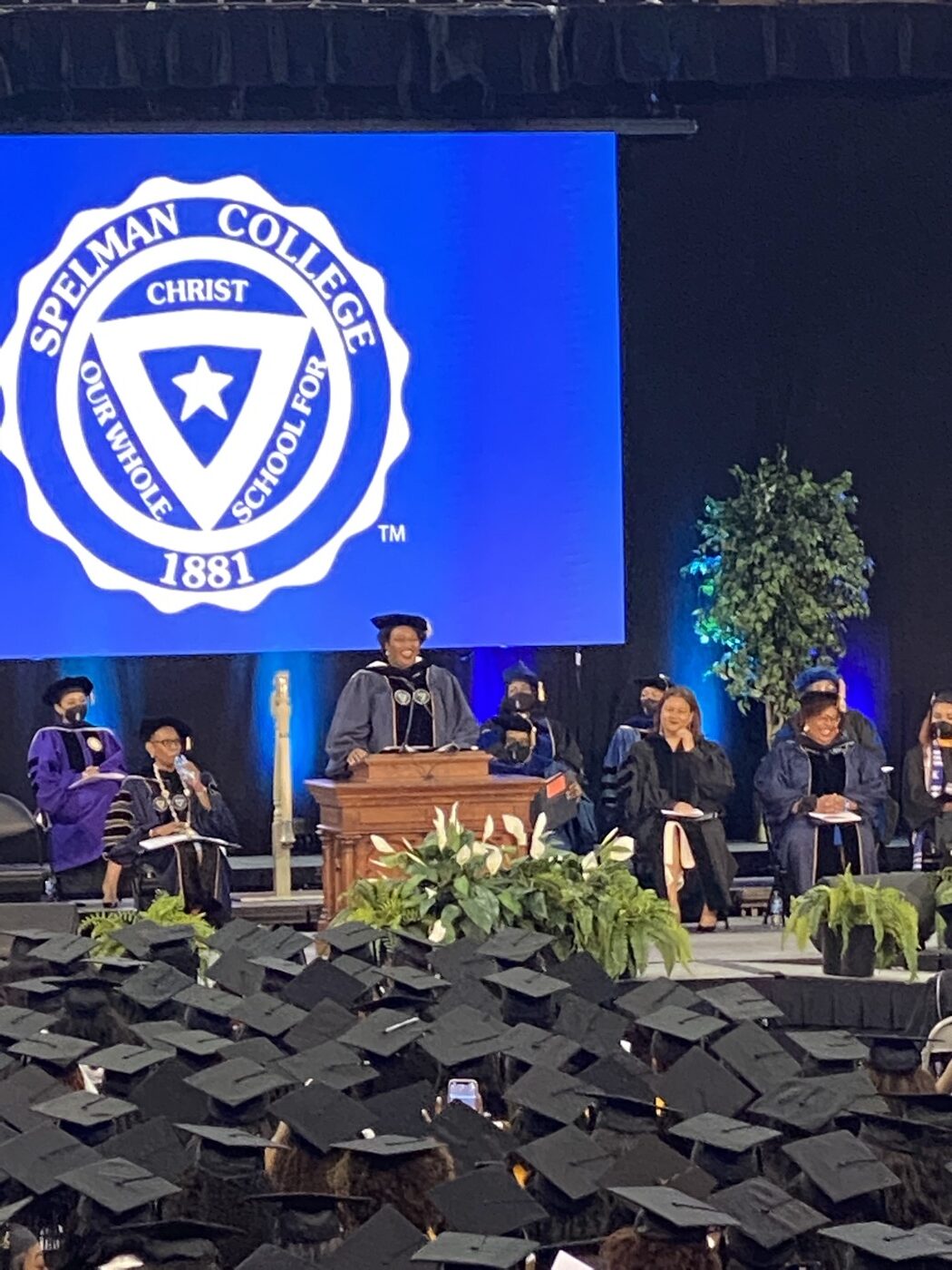
My sister graduated from Spelman. I watched her walk across that stage, and I understood something that day that I had only understood abstractly before: that the existence of this place was an act of resistance and love, that it was built specifically so that Black women could be seen and challenged and shaped into leaders. Spelman has produced congresswomen, doctors, Nobel Prize nominees, CEOs, artists. It has produced my sister, which matters to me more than the list.
The campus is not open for casual tourists wandering in the way a public park might be, but the history of the Atlanta University Center is visible and palpable in the surrounding neighborhood. The legacy of Spelman, Morehouse, Clark Atlanta, and the other AUC schools is woven into this part of the city. If you have any connection to HBCUs, or if you are raising children who need to understand what these institutions mean, bring them here. Stand near that campus and tell them what was built, and why, and who it was built for.
Ebenezer Baptist Church
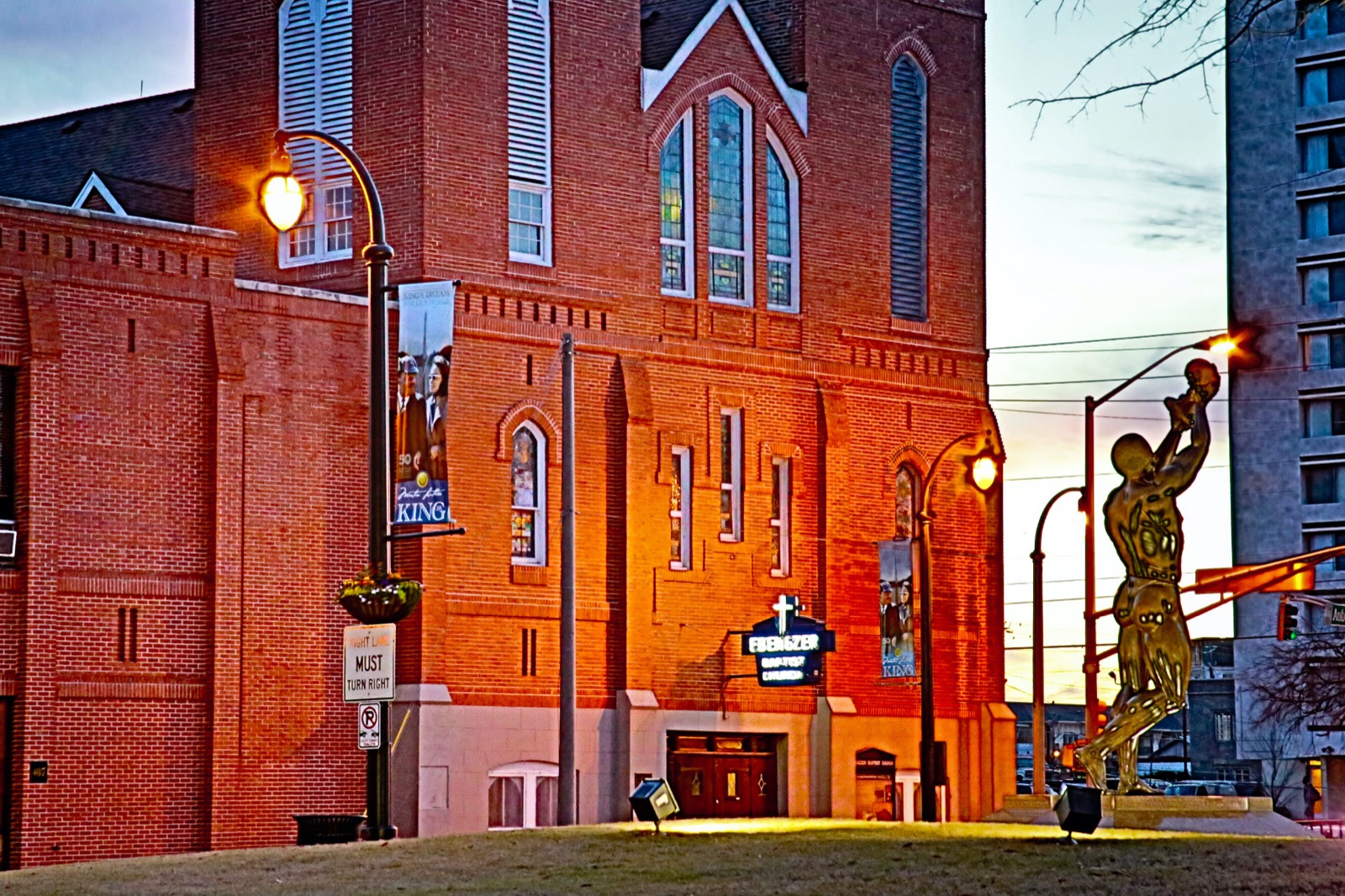
I attended Ebenezer Baptist Church as a small child. I could not have been older than four or five. I don’t carry a clear visual memory of those Sundays, more of a feeling, the sound of the choir, the weight and warmth of a Black church service that asks your whole body to participate.
Ebenezer, of course, is the church of Martin Luther King Jr. and his father before him. It sits in Sweet Auburn, one of Atlanta’s historically Black neighborhoods, and it functions as both a living congregation and a site of profound historical importance. The original Ebenezer building, where King preached and where both he and his father pastored, stands adjacent to the newer sanctuary built to accommodate the growing congregation.
What I want to say about Ebenezer, because I think it matters, is that it is not a museum. It’s not frozen in 1963. It is a church that still holds Sunday services, still roots a community, still carries the tradition of social justice preaching that King embodied. When you visit, visit with that understanding. This is hallowed ground, yes. It is also a living institution, and the people who attend it deserve that distinction.
The entire Sweet Auburn corridor, including the Martin Luther King Jr. National Historical Park is worth a full morning. Allow time to sit with it. Don’t rush.
While you are in the neighborhood, two stops round out the experience in a way that feels less like tourism and more like participation. The Sweet Auburn Curb Market has been here since 1924, a full century of Atlanta feeding itself under one roof. It is the city’s only public market, a place where Caribbean, Vietnamese, Southern comfort, and barbecue vendors share space alongside fresh produce stalls and bakers who have been perfecting pound cake for decades. It is unpretentious and alive, and it sits close enough to Ebenezer that you can walk from the sermon to the lunch counter without breaking stride. Go hungry.
And then there is For Keeps, a Black-owned bookstore and reading room on Auburn Avenue itself, opened by Rosa Duffy in 2018. For Keeps specializes in rare and classic works by Black authors. First editions, out-of-print titles, periodicals that trace the intellectual history of Black thought in America. Some pieces in the permanent collection are not for sale. You sit with them, the way you sit with art. In a neighborhood defined by legacy, For Keeps feels like an extension of everything Sweet Auburn has always been: a place where Black culture is preserved, celebrated, and passed forward. If you are raising readers, bring them here.
The Beautiful Restaurant
Before I say anything else about The Beautiful Restaurant, let me say this: the soul food is extraordinary. I do not use that word lightly. Soul food is heritage. It is the culinary tradition born from necessity and transformed by genius, the food that came out of the American South through the hands of Black women and men who made something remarkable from what they had. When I sit down at The Beautiful, I am not just eating. I am participating in a lineage. The fried chicken, the collard greens, the cornbread, the dishes that have fed Black families at Sunday dinners and after funerals and at celebrations for generations. It all carries that weight, and it carries it beautifully.
My Jamaican heritage runs alongside my Southern roots, and the two are not as separate as you might think. Both traditions come from the same larger story of the African diaspora, both built sustenance and culture from similar circumstances. When I eat soul food, I feel both of those histories. My grandmother’s yard in Jamaica and a church supper in Georgia are not as far apart as the map suggests.
The Beautiful is on Cascade Road, historically one of Atlanta’s most prosperous Black neighborhoods. Go for lunch. Order more than you think you need. Bring people you love. And when the meal sends you home wanting to cook in that same spirit, Burlap & Barrel Royal Cinnamon belongs in your pantry — the same single-origin ethos, applied to a kitchen staple.
Georgia Aquarium
I have traveled to Atlanta many times with my children, who are nine and five, and I have learned through years of travel with them that the best trips hold room for wonder alongside history. Atlanta’s Georgia Aquarium is one of the world’s largest, and it delivers on wonder completely.

The whale sharks alone, those slow, enormous, prehistoric creatures drifting through the Ocean Voyager exhibit, are worth the visit. My youngest pressed both hands flat against the glass the last time we were near an exhibit like this. That image stays with me. There is something about watching a child encounter the scale of the natural world that recalibrates everything.
The Georgia Aquarium is also an exceptionally well-run institution, with conservation programs and research initiatives that give the visit additional weight. It sits in Centennial Olympic Park, close to the National Center for Civil and Human Rights and the World of Coca-Cola, so the area rewards a full day. Book tickets in advance. Summer and school holidays fill it quickly. For outdoor summer visits with little ones, pack reef-safe SPF 50 sunscreen and Hint Infused Water — Centennial Olympic Park in full Atlanta summer heat is no joke.
Underground Atlanta
Atlanta is a city that has rebuilt itself more than once, and Underground Atlanta is perhaps the most literal expression of that tendency. Below the current street level sits the original street grid of the city, preserved from the 1920s when viaducts were built over the commercial district and the lower level was simply abandoned. It was redeveloped in the 1960s and has cycled through reinvention several times since.
Underground Atlanta is not what it was at its height. The city is in the midst of yet another revitalization effort for this space, and its character is in flux. But I find something compelling about that cycle, something very Atlanta about it. This is a city that does not stay still. It builds on top of itself, literally. The old Atlanta sits under the new one, and periodically someone decides to excavate and see what’s worth keeping.
I think about that when I walk through Atlanta as an adult, all the layers underneath. The Atlanta of my early childhood, the Atlanta of my mother’s work at the CDC in the 1990s (she was a medical anthropologist, and the work she did on HIV/AIDS during those years was urgent and important), the Atlanta of my aunt’s decades at Agnes Scott. The city I move through now is not the same city, but the bones are there. Underground is almost a metaphor made physical.
Why I Came Alone
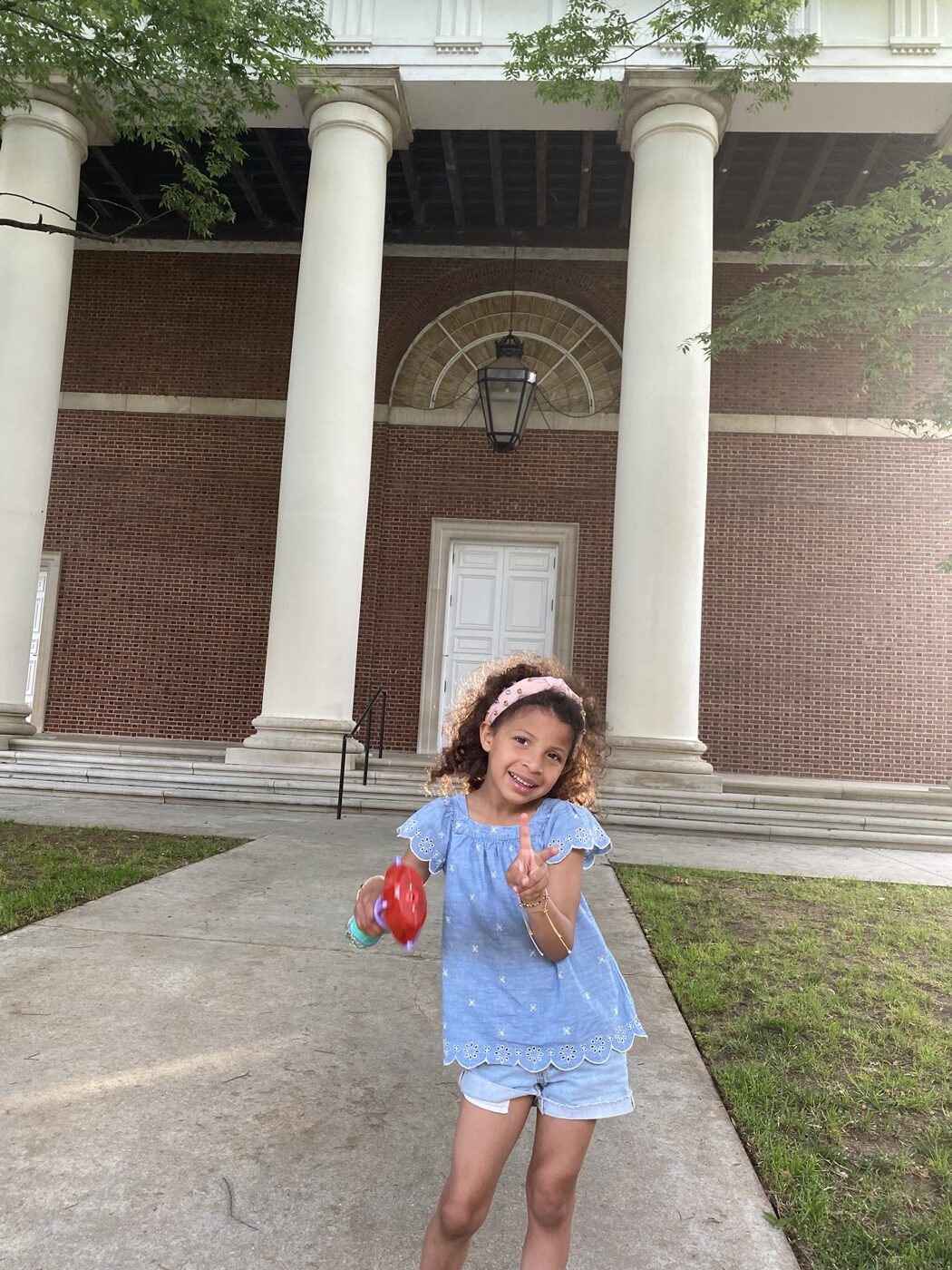
I came to Atlanta alone this time. No kids, no itinerary built around nap schedules or snack breaks. Just me, standing on the Agnes Scott campus where my aunt built something lasting, letting the grief and the pride sit together without distraction. Sometimes a trip needs that kind of quiet. Sometimes you need to walk through a place without narrating it for anyone else.
I am African-American and Jamaican. My Southern history and my island history are both ancient and complicated and deeply beautiful, and I carry both with intention. Atlanta is part of that story. The church where I sat as a child is part of that story. My sister’s history at Spelman is part of that story. Coming back alone gave me the space to feel all of it without filtering it through anyone else’s experience.
The Sawyer Campaign exists, in part, because I believe that how we travel matters. The stories we carry home from the places we go, the history we sit with, the food we share. These choices accumulate. They shape who we are, and eventually, they shape the stories we tell our children. I will bring Sophie and Brody here again one day. They will walk this campus and understand that women who looked like them have always been building. But this trip was mine this time.
Atlanta has changed in the thirty years since I lived here. The traffic alone could make you weep. The development has transformed entire neighborhoods. But the cultural heartbeat of this city, the HBCU legacy, the civil rights history, the tradition of Black excellence and Black community and Black joy that has always defined Atlanta, that hasn’t changed. It endures. It welcomed me back, alone with my memories, and that was exactly what I needed.
Come and see it for yourself.
Have you traveled to Atlanta, whether solo or with family? I’d love to hear which pieces of the city have stayed with you. Leave a comment below or find me on Instagram.
This post contains affiliate links — if you purchase through these links, we may earn a small commission at no extra cost to you.